By Global Consultants Review Team

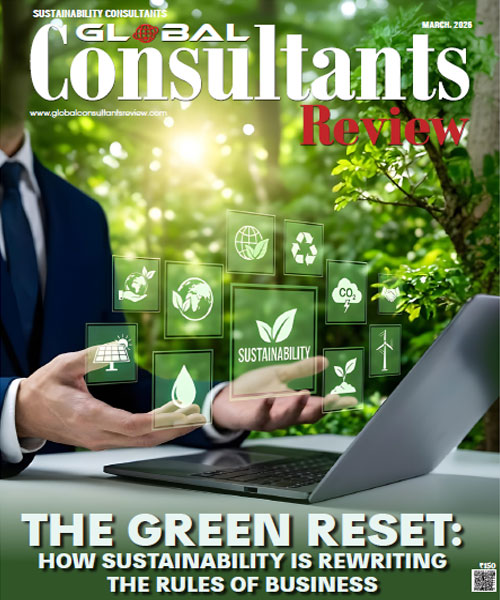
Sustainability has shifted from a peripheral concern to a central business priority. What was once managed under corporate social responsibility is now embedded in boardroom agendas, investor briefings, and long-term strategic roadmaps. Regulatory pressures are increasing, stakeholder expectations are evolving, and climate-related risks are becoming tangible. In this environment, consultants can no longer rely on traditional advisory models centered solely on cost reduction, operational efficiency, and rapid growth. The sustainability mandate demands a reinvention of the consulting playbook.
The New Definition of Business Success
Historically, performance was measured by quarterly earnings, market share, and shareholder returns. Today, the definition of success is broader and more nuanced. Companies are judged by their environmental footprint, social impact, governance standards, and resilience against long-term risks. Investors assess ESG metrics alongside financial statements. Customers increasingly choose brands aligned with their values. Employees, particularly younger generations, seek purpose-driven organizations.
For consultants, this shift requires a rethinking of value creation frameworks. Growth strategies must consider carbon exposure, supply chain transparency, diversity metrics, and community engagement. Long-term resilience has become as important as short-term profitability.
Moving Beyond Compliance Many organizations initially approached sustainability from a compliance perspective. Regulatory reporting requirements and disclosure mandates forced companies to measure emissions and publish sustainability reports. However, compliance is only the starting point.
Consultants must help clients move from reactive reporting to proactive transformation. Instead of treating sustainability as an obligation, it should be positioned as a competitive advantage. Energy efficiency initiatives reduce operating costs. Circular economy models lower material dependency. Ethical sourcing enhances brand reputation. Sustainable innovation opens access to new markets and investor capital.
The advisory role now extends beyond interpreting regulations to redesigning business models.
Embedding Sustainability Across Functions
One of the biggest challenges organizations face is fragmentation. Sustainability often sits within a dedicated department, disconnected from core operations. This siloed approach limits impact.
Consultants must drive integration across every function. Operations teams need strategies for decarbonization and waste reduction. Finance departments must evaluate sustainability-linked funding instruments and assess climate-related risks. Human resources should align talent strategies with diversity and inclusion goals. Technology teams must implement systems that measure and manage environmental performance.
True transformation occurs when sustainability becomes embedded in decision-making processes at every level of the organization.
The Data and Technology Imperative Credible sustainability strategies depend on accurate data. Yet many companies struggle with inconsistent reporting systems, limited visibility into supply chains, and fragmented data sources. Scope 3 emissions, which often represent the largest share of a company’s carbon footprint, are particularly difficult to track.
Consultants must prioritize digital enablement. Advanced analytics, AI-driven insights, and real-time monitoring tools can enhance transparency and accountability. Robust dashboards allow executives to link sustainability performance with financial outcomes. Scenario modeling supports informed decision-making under climate uncertainty.
Technology is no longer an optional enhancement; it is foundational to sustainable strategy execution.
Cultural Transformation and Leadership Alignment
Even the most sophisticated sustainability strategy will fail without cultural alignment. Leadership commitment is essential. Boards and executive teams must articulate clear sustainability objectives and integrate them into corporate purpose statements.
Consultants increasingly serve as change facilitators. They guide leadership workshops, design incentive structures tied to ESG targets, and develop communication strategies to ensure organizational buy-in. Employees need to understand how sustainability goals connect to their daily responsibilities.
When culture aligns with strategy, sustainability transitions from a project to a mindset.
Innovation and New Business Models Sustainability is not only about risk mitigation; it is a catalyst for innovation. Emerging trends such as renewable energy integration, sustainable product design, and resource-sharing platforms are reshaping industries. Businesses that embrace innovation gain first-mover advantages.
Consultants must help clients identify opportunities for new revenue streams. Product-as-a-service models extend product lifecycles while generating recurring income. Green product lines attract environmentally conscious consumers. Partnerships with clean technology providers unlock operational efficiencies.
Advisory firms that encourage bold reinvention rather than incremental improvement will lead the next phase of growth.
Managing Risk in an Era of Transparency
Increased scrutiny from regulators, investors, and civil society means that sustainability claims must be substantiated. Greenwashing poses significant reputational and legal risks. Transparent reporting, measurable targets, and independent verification are critical safeguards.
Consultants play a crucial role in establishing governance structures that ensure accountability. They design risk management frameworks, align reporting with global standards, and implement audit mechanisms. By strengthening credibility, consultants protect clients from potential backlash while reinforcing stakeholder trust.
Reinventing the Consulting Profession
The sustainability mandate is reshaping the consulting industry itself. Firms must invest in upskilling teams, recruiting sustainability experts, and building partnerships across environmental science, technology, and finance. Advisory methodologies must evolve to incorporate impact measurement and long-term scenario planning.
Equally important is authenticity. Consulting firms must apply sustainability principles within their own operations to maintain credibility. Clients increasingly expect advisors to model the practices they recommend.
The Road Ahead
Sustainability is not a temporary trend; it is a structural transformation of global business. Climate risks, resource constraints, and social inequalities are influencing economic systems worldwide. Organizations that fail to adapt face declining competitiveness and reputational vulnerability.
For consultants, this transformation represents both challenge and opportunity. Reinventing the playbook means embracing cross-functional integration, leveraging technology, enabling cultural change, and redefining value creation. Those who evolve will become trusted partners in building resilient, responsible enterprises.
The sustainability mandate is clear: adapt, innovate, and lead. In doing so, consultants will not only secure their relevance but also help shape a future where profitability and purpose move forward together.
We use cookies to ensure you get the best experience on our website. Read more...